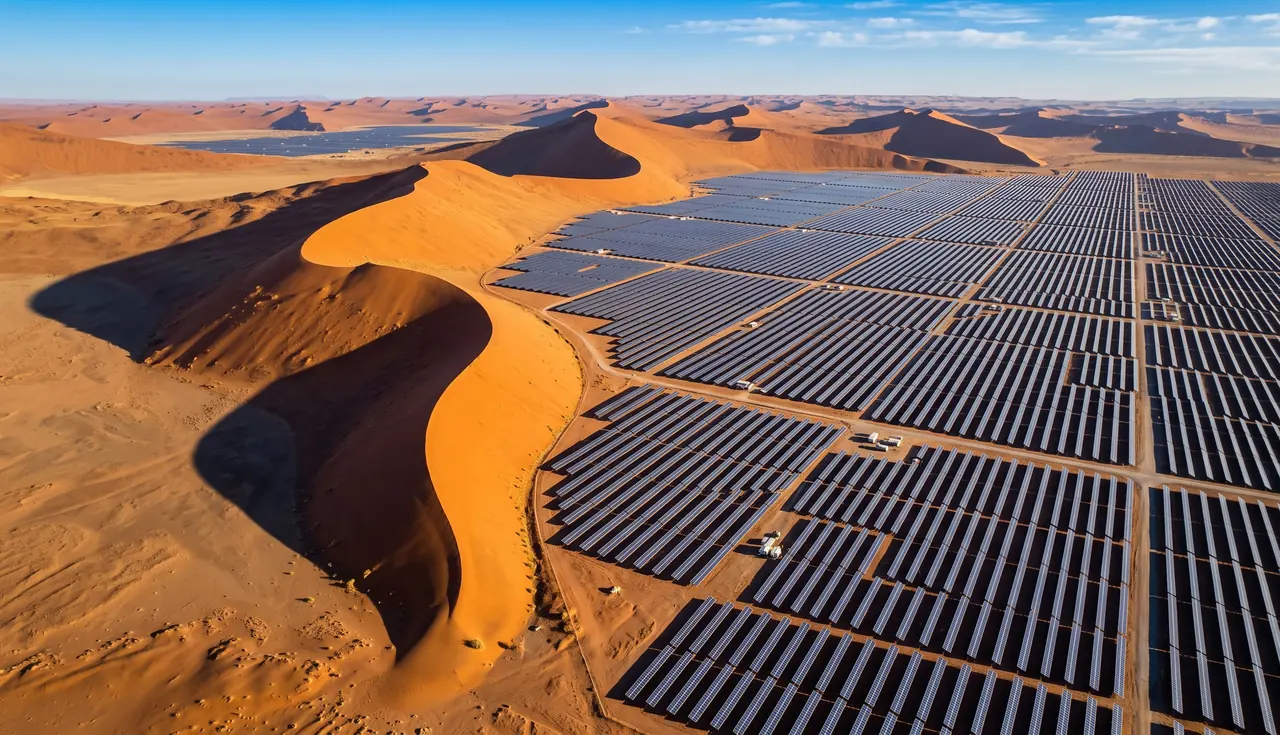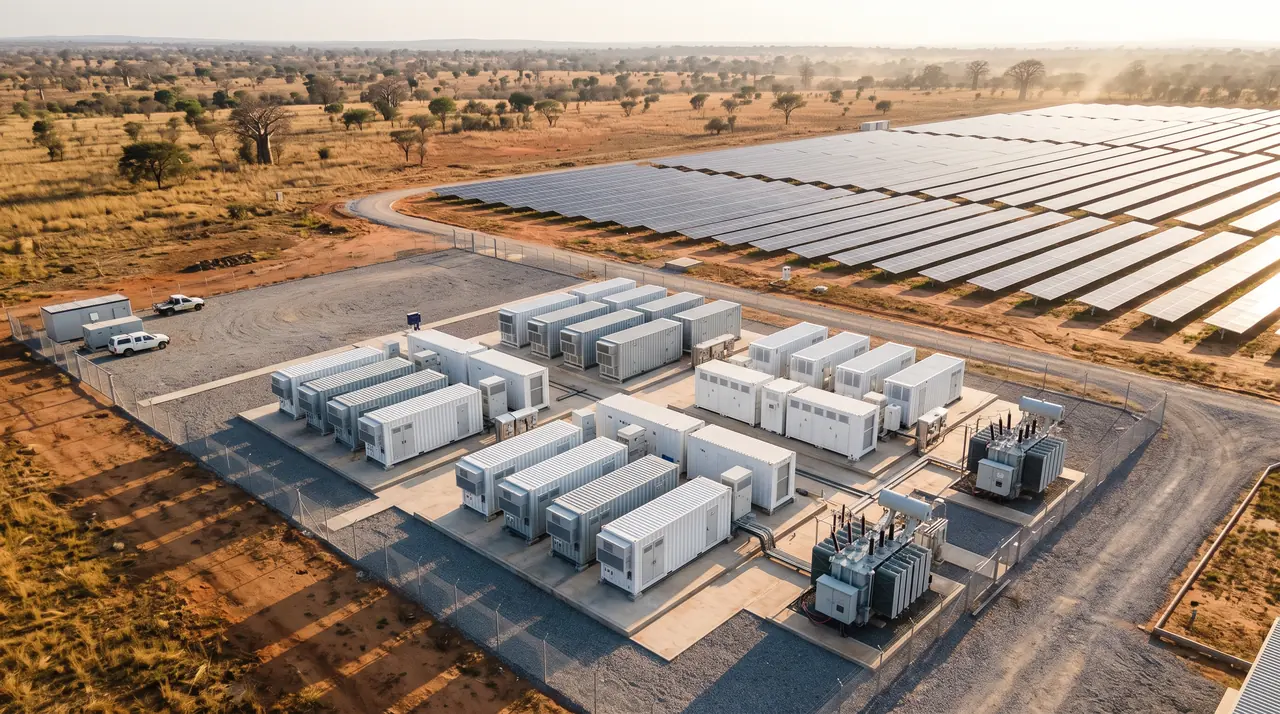
Aerial view of a battery energy storage site with rows of white containers and transformers beside a solar farm in the savanna

Sunlight is the beginning of the design.

A solar panel produces when the sun allows. An energy system must also respond to the buyer, the grid and the place it occupies.

Design for the hours that matter.

Solar generation and electricity demand do not always arrive at the same time. Batteries can move energy between hours. A hybrid design brings generation, storage and control into one operating strategy.

The starting point is an hourly model: expected production, consumption, storage losses, grid constraints and operating reserves. That model determines what can be contracted. An installed capacity figure alone cannot promise continuous output.
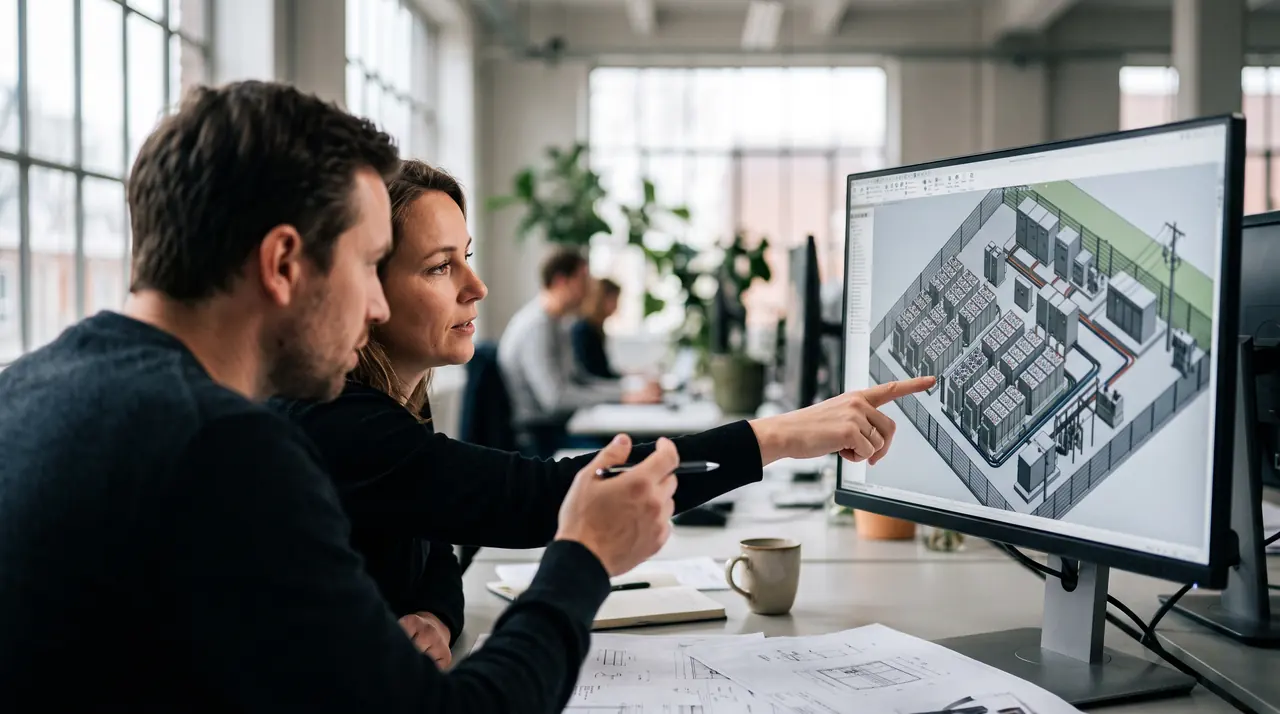
Two colleagues at a monitor discussing a 3D layout of a battery storage site, one pointing at the screen

Build the right combination.

  1. Utility-scale solar

    Ground-mounted photovoltaic plants, with layout decisions that account for energy yield, land use, habitat and water movement.

  2. Battery energy storage

    Co-located or stand-alone storage assessed for shifting energy, managing peaks and providing grid support. Capacity and duration follow the use case.

  3. Hybrid systems

    Solar, storage and any required complementary supply coordinated around a defined delivery profile.

  4. Rooftops & solar carports

    Use existing buildings and parking areas to generate electricity, with opportunities for shade, charging, planting and water management.

  5. Local energy systems

    Connect shared generation, household storage, energy management and local participation.

Engineering begins with the landscape.

Soil, drainage, habitat and local land use belong in the design brief. Establishing an ecological baseline early allows the team to make specific design decisions and measure change against a known starting point.

Nature-inclusive design is a process of evidence, choices and stewardship. Certification claims must match the named project, certificate holder and assessed scope.

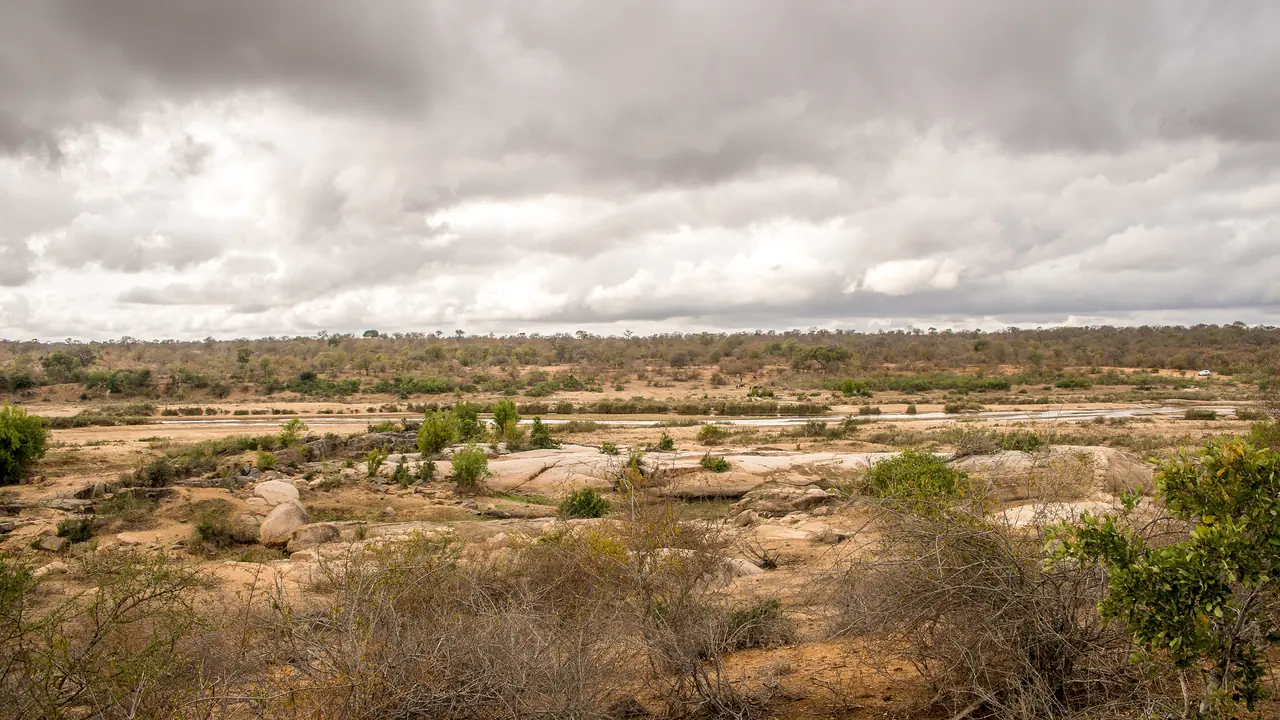
Dry savanna riverbed with pale granite rocks and scattered bushes under a heavy grey cloudy sky

Namibian solar, with storage still to be sized.

Our Namibia → Zambia project is in development, with 100 MWp of planned solar capacity. Storage and the supply profile will be defined through project design, with nature-inclusive design and Your.Earth in the brief. 100 MWp is nameplate capacity, not continuous delivery.

Planned solar capacity
100 MWp
Stage
In development

Discuss your energy system

Discuss your energy system