What happens when the sun goes down?

Storage can extend the usefulness of solar generation. The answer to “how far?” starts with the energy balance.

Power and energy answer different questions.

Solar capacity in MWp describes rated peak generation under standard test conditions. Battery power in MW describes the rate of charge or discharge. Battery energy in MWh describes the quantity stored. These figures belong together in the system model.
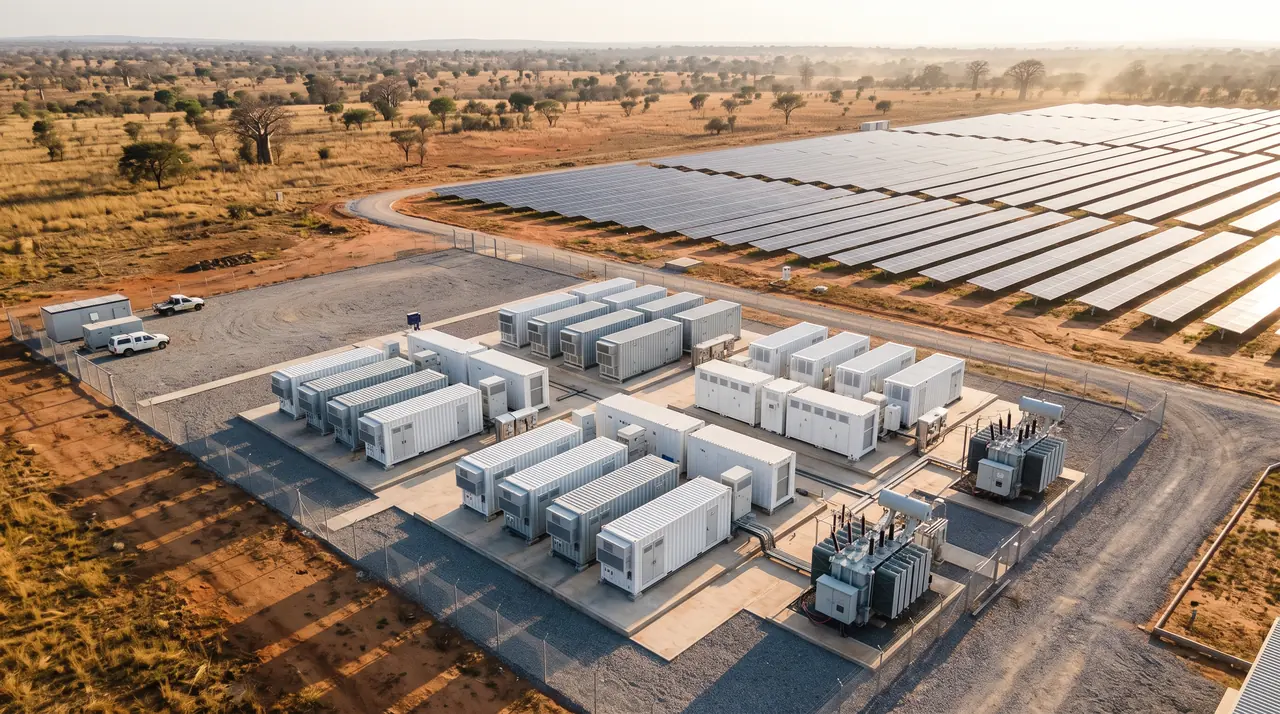
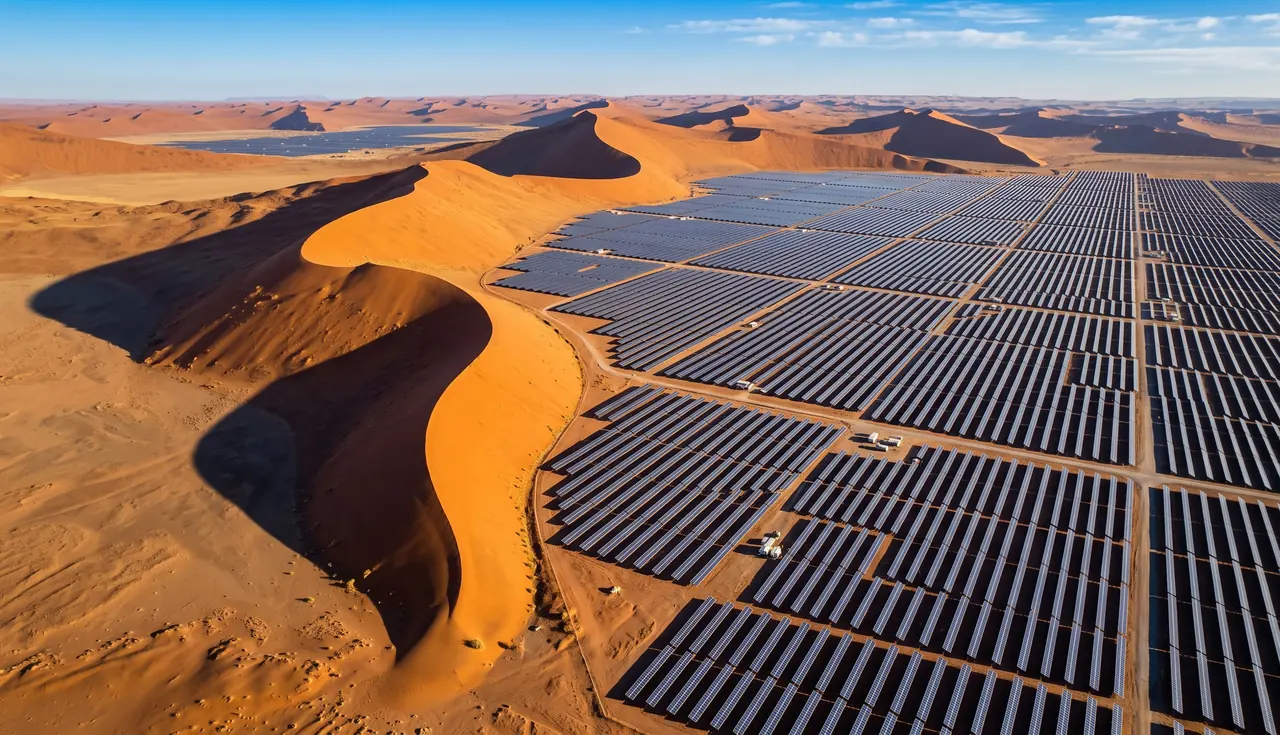
Aerial view of a battery energy storage site with rows of white containers and transformers beside a solar farm in the savanna

A profile is a design outcome.

An evening delivery requirement may call for a different system from round-the-clock supply. The design needs to account for seasonal generation, storage losses, weather, grid constraints and reserves.

This is why 100 MWp of solar does not, by itself, mean 100 MW continuously. A firm commitment requires a demonstrated design and agreed commercial performance terms.

Start with the buyer’s clock.

The most useful first input is often the electricity demand profile. It shows the hours and seasons that the system must serve. Solar, storage and any complementary supply can then be designed around it.

Namibia: a profile still to be designed.

Our planned solar project in Namibia is intended to supply electricity to Zambia. Its 100 MWp is nameplate capacity, not continuous delivery: storage and the supply profile are still to be defined through project design.

Planned solar capacity
100 MWp
Stage
In development

Every next chapter starts with a conversation.

Talk to the team