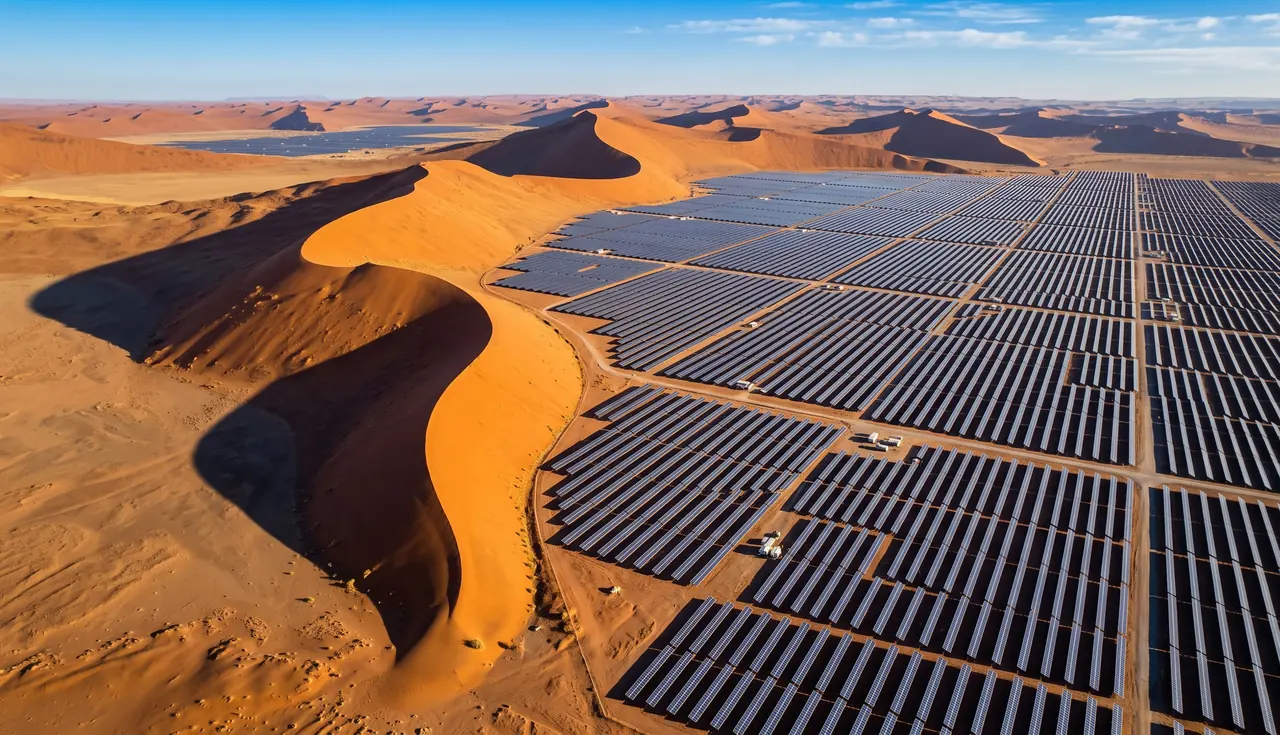
First, there is a resource.
A proposed solar site offers a starting point. Turning it into useful electricity requires land rights, studies, a grid pathway and a design that fits the landscape. Without that work, the resource remains a possibility.
The distance between a sunny site and a buyer’s need is measured in more than kilometres.
A proposed solar site offers a starting point. Turning it into useful electricity requires land rights, studies, a grid pathway and a design that fits the landscape. Without that work, the resource remains a possibility.
An electricity buyer has a location, a load profile and commercial requirements. Those needs determine the shape of the supply discussion. When generation is in Namibia and intended consumption is in Zambia, transmission and cross-border arrangements become central.
Electriffy’s planned 100 MWp Namibia project brings this work around one purpose. Its capacity is a development target. Its final delivery profile depends on the complete system design and agreements.
That distinction is essential to telling the story accurately: a solar nameplate figure describes a plant’s rated peak capacity, while a contracted delivery profile describes what the system has committed to supply.
100 MWp of planned solar capacity in Namibia, with electricity intended for supply to Zambia. The project is in development; the transmission route, offtaker, contracts and financial close are not yet confirmed.